AI-POL: Advancing Innovation, Governance and Responsible AI in Law Enforcement

About the Initiative
Law enforcement agencies across the globe are increasingly exploring the use of AI systems for a wide range of purposes, including image analysis, content generation, process optimization, and workflow automation. In the absence of adequate safeguards, however, AI can jeopardize human rights, the rule of law and public trust in law enforcement. Despite emerging regulatory frameworks, global approaches remain fragmented and often lack specificity for the operational, legal and accountability requirements of law enforcement. AI-POL: Advancing Innovation, Governance and Responsible AI in Law Enforcement is a response to this gap, and aims to promote structured, practical, and rights-based AI governance tailored to policing environments.
Since 2017, UNICRI and the International Criminal Police Organization (INTERPOL) have sought to foster responsible AI innovation in law enforcement and to support agencies in developing sound AI practices. In 2023, with the support of the European Union, they launched the Toolkit for Responsible AI Innovation in Law Enforcement, which serves as a blueprint for responsible AI in law enforcement.
The AI-POL initiative, which is funded by the European Union through the Service for Foreign Policy Instruments (FPI) of the European Commission, is the next phase of this work and seeks to support law enforcement agencies in five participating countries to integrate AI in a responsible, human rights-compliant, and trust-oriented manner.
The five participating AI-POL countries are:

Main Workstreams
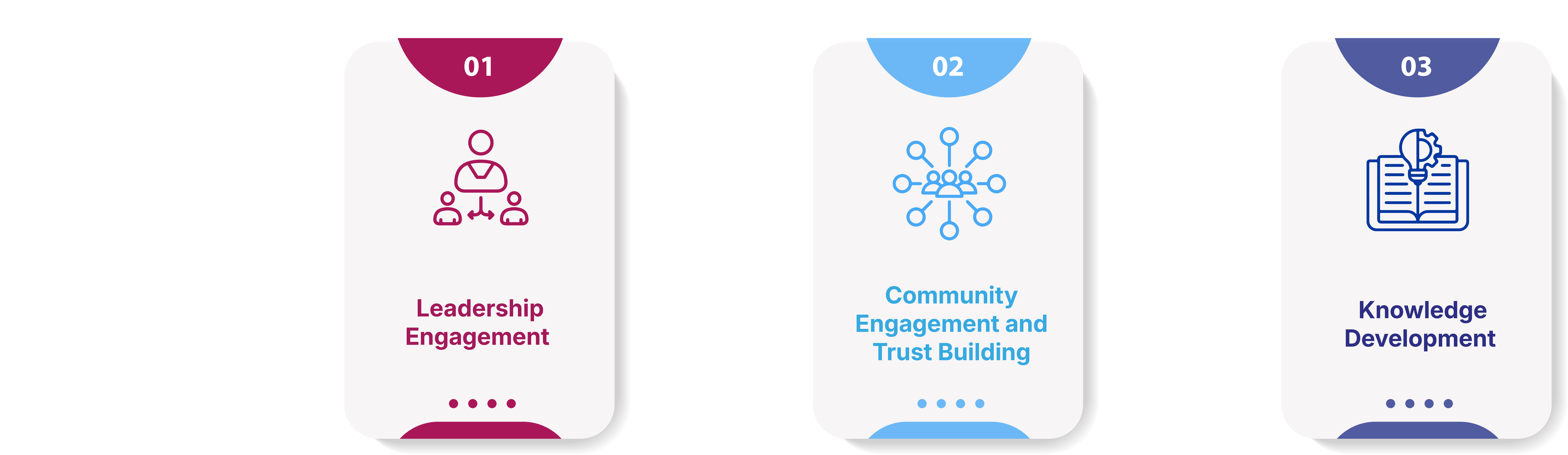
The initiative is structured around three mutually reinforcing pillars:
1. Leadership Engagement
AI-POL delivers a tailored Leadership Dialogue programme for senior law enforcement officials, which includes in-country strategic dialogues and executive-level training on AI and digital transformation. This workstream focuses on embedding responsible AI at the highest levels of decision-making.
2. Community Engagement and Trust Building
Recognizing that public trust is central to effective policing, AI-POL seeks to support dialogue between law enforcement and communities through pilot initiatives on transparency and accountability, as well as communication strategies around the use of AI in law enforcement. This is intended to ensure that the integration of AI adoption is not only effective, but also legitimate and socially accepted.
3. Knowledge Development
AI-POL seeks to ground the guidance contained in the AI Toolkit through a set of two actionable, use-case specific guidance documents focusing on the use of generative AI in law enforcement and the use of AI in counter-terrorism. These good practice frameworks seek to support agencies to move from principles to implementation.
For more information, contact: unicri.aicentre@un.org